

Table of Contents
- Why Does Creatine Cause Bloating? The Science Behind the Swelling
- Creatine Monohydrate Water Retention: Muscle Hydration vs. Subcutaneous Water
- Creatine Loading Phase Bloating: Why the First Week Feels Different
- How to Take Creatine Without Bloating: A Step-by-Step Protocol
- Creatine Dosage for Beginners: How Much to Take Without Stomach Distress
- Is Creatine Bloating Permanent? What the Evidence Says
- Choosing a Clean Creatine: What to Look For
- Conclusion: Take Control of Your Creatine Protocol
- Frequently Asked Questions
Last Updated: October 2, 2026
Why Does Creatine Cause Bloating? The Science Behind the Swelling
Why does creatine cause bloating? For most people, it comes down to water movement, not fat gain.
Here is the part most people get wrong: the scale going up does not mean you got softer.
Below, we'll show you how to take creatine without bloating, backed by a simple step-by-step protocol. We'll also cover dosage for beginners and what to look for in a clean product.
Creatine monohydrate water retention is the term for the fluid your muscle cells hold after you start supplementing. According to the International Society of Sports Nutrition position stand on creatine, creatine is one of the most studied sports supplements for strength and power. Most of the "bloating" people describe is this normal fluid shift, not digestive trouble.

Creatine Monohydrate Water Retention: Muscle Hydration vs. Subcutaneous Water
Water retention from creatine is not the same as the puffiness you get from a salty meal. The fluid goes where it helps you, not where it hides your progress.
Two things can happen at once, and they feel very different:
- Intracellular water retention: fluid pulled inside muscle cells, which supports muscle volume and performance
- Subcutaneous water: fluid held just under the skin, which looks soft and is not caused by creatine in most cases
What Intracellular Water Retention Actually Means
Intracellular water retention is the fluid stored inside your muscle cells. It makes muscles look fuller and supports the mechanical work of lifting. This is the effect most lifters actually want.
Why Osmotic Pressure Pulls Water Into Muscle Cells
Osmotic pressure is the force that moves water toward a higher concentration of dissolved particles. When creatine enters a muscle cell, it raises that concentration, so water follows it in. That is the whole mechanism in one sentence.
Creatine Loading Phase Bloating: Why the First Week Feels Different
The creatine loading phase bloating people describe in the first week is usually two separate events happening at once, and most guides blur them together. One is water moving into muscle cells. The other is your gut reacting to a sudden, large amount of powder. They feel different, they resolve on different timelines, and they need different fixes.
The Osmotic Shift Versus the Gut Load
When you take a large dose of creatine, a portion of it enters muscle cells and raises the concentration of dissolved particles inside those cells. Water follows by osmosis.
The gut side is mechanical. A loading phase typically means around 20 grams per day split into four 5 gram servings for five to seven days, then dropping to a maintenance dose of 3 to 5 grams per day.
What the First Week Actually Looks Like
A common pattern for people who load:
- Days 1 to 3: muscles start pulling water in, scale moves up slightly, muscles feel fuller
- Days 2 to 5: if the dose is split poorly or taken dry, gut symptoms show up here
- Days 5 to 7: muscle saturation approaches its ceiling, water shift stabilizes
- Week 2 onward: maintenance dose, most gut symptoms fade if you corrected the timing
If you skip loading and take 3 to 5 grams per day from day one, saturation takes roughly three to four weeks instead of one. The trade-off is simple. You wait longer for the full effect, but the gut almost never complains.
Why Splitting the Dose Matters More Than the Total
Four 5 gram servings spread across the day give your intestine time to move each one through. One 20 gram serving does not. If you are set on loading, split it, take each serving with food, and mix it in at least 8 to 12 ounces of water.
Approach |
Daily Amount |
Time to Saturate |
Typical Gut Response |
|---|---|---|---|
Loading phase |
About 20 g split into 4 servings |
5 to 7 days |
Higher risk of gas and cramping |
No loading |
3 to 5 g once daily |
3 to 4 weeks |
Lower risk, steadier tolerance |
If you are sensitive, the no-loading route is the safer bet. You still reach the same place, just slower.
How to Take Creatine Without Bloating: A Step-by-Step Protocol
Learning how to take creatine without bloating comes down to three moves: start low, split the dose, and take it with food. None of these require special products.
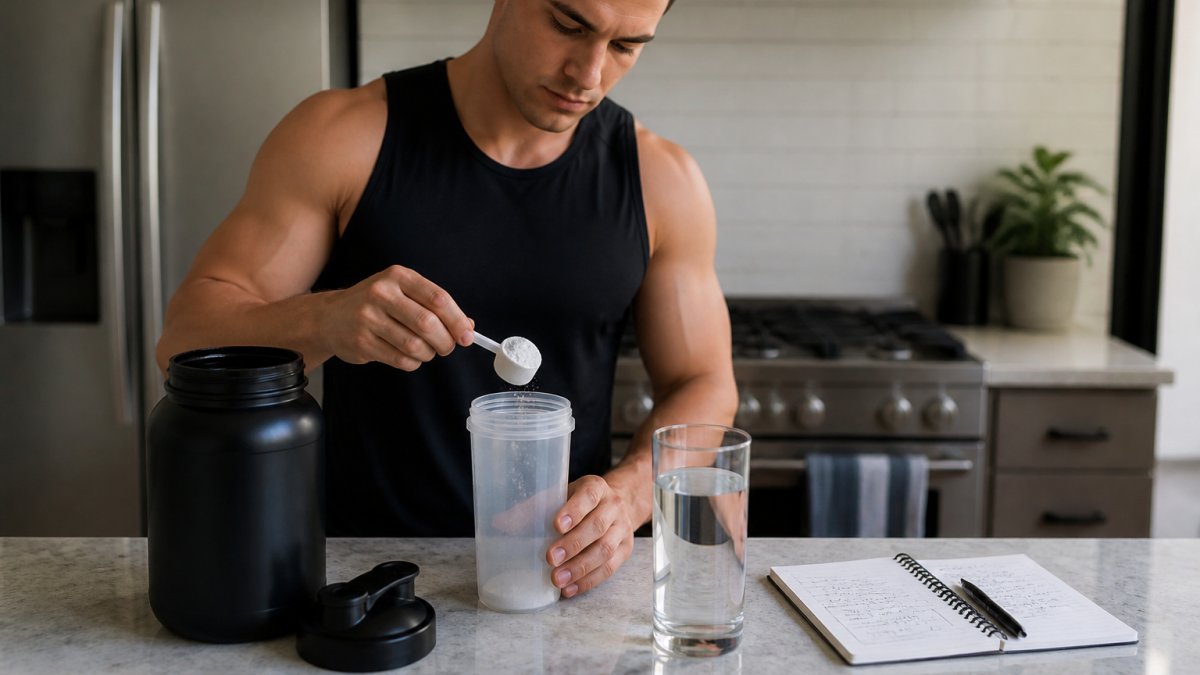
Step 1: Start With a Maintenance Dose
Skip the big loading phase. Begin with a smaller daily dose and let your muscles saturate over two to four weeks. This is the single biggest change most people can make.
Step 2: Split Your Daily Dose and Adjust Your Water Intake
If a full scoop upsets your stomach, take half in the morning and half later. Drink water steadily through the day rather than chugging it all at once. Good hydration status helps your body handle the fluid shift.
Step 3: Time Your Dose Around Meals
Take your creatine with a meal or a shake. Food slows how fast it hits your gut, which reduces the chance of gastrointestinal distress.
Creatine Dosage for Beginners: How Much to Take Without Stomach Distress
Creatine dosage for beginners is where most bloating complaints are actually solved, and it is the section most competing guides skip past. They tell you to start low. They rarely tell you what low means in grams, or how to ramp up without triggering the gut.
Here is a slow-start protocol you can follow if you are prone to bloating or you have never taken creatine before.
The Slow-Start Protocol
- Week 1: 3 grams per day, taken with a meal
- Week 2: 3 grams per day, same timing, assess how you feel
- Week 3: 5 grams per day if week 1 and 2 were comfortable
- Week 4 and beyond: stay at 5 grams per day, or split into 2.5 grams twice daily if a single serving feels heavy
This is the opposite of a loading phase. You are letting your muscles saturate gradually over three to four weeks instead of forcing it in one. The total amount of creatine in your system at the end of the month is the same. The difference is how much arrives in your gut on any given day.
Why 3 Grams Is the Starting Point
Three grams is small enough that most adults tolerate it with food, and large enough to begin saturation. It is also easy to measure if you use a scale or a pre-portioned scoop. If you only have a 5 gram scoop, take a level half scoop for the first two weeks.
Timing Rules That Reduce Gut Symptoms
- Take it with a meal or a shake, never on a dry stomach
- Mix it in at least 8 to 12 ounces of water and stir until fully dissolved
- If you take it twice daily, space the servings at least six hours apart
- Keep your total daily water intake steady rather than chugging a large amount right after your dose
What Most Guides Miss
Absorption rate matters more than hitting a big number fast. A steady 3 to 5 grams per day that your gut tolerates will get you to saturation.
If you have tried creatine before and quit because of stomach discomfort, the problem was almost certainly the dose size or the timing, not the molecule.
For a clean starting point, CREA-RAYGE is pure creatine monohydrate with no fillers, no sugar, and no additives, made in an FDA-registered, GMP-compliant facility and third-party lab tested. You can shop CREA-RAYGE creatine powder here. If you prefer no mixing or measuring, CREARAYGE Gummies deliver 1,000 mg of creatine monohydrate per gummy, so three gummies give you a 3 gram starting dose. You can shop CREARAYGE Gummies here.

Is Creatine Bloating Permanent? What the Evidence Says
No, creatine bloating is not permanent for most people. The fluid shift settles as your body adapts, usually within a few weeks.
The key is separating two things:
- Muscle cell hydration: normal, expected, and helpful for performance
- Digestive bloating: gas and distension from how you take the powder, which is fixable
If your discomfort is in your gut, it is almost always a dosing or timing issue, not a reason to quit. Adjust how you take it and the problem usually clears up.
Choosing a Clean Creatine: What to Look For
A clean product removes one more variable. If your creatine has fillers, sugar, or additives, it is harder to tell what is causing the stomach issue.
Look for these on the label:
- 100% creatine monohydrate with no fillers
- No added sugar or sodium
- Third-party testing for heavy metals and purity
- Made in a GMP-compliant facility
Micronized creatine dissolves more easily, which some people find gentler on the stomach. It is the same molecule, just ground finer.
For a clean option, CREA-RAYGE is pure creatine monohydrate with no fillers, no sugar, and no additives. It is made in the USA in a GMP-compliant, FDA-registered facility and third-party tested for heavy metals and purity. You can shop CREA-RAYGE creatine powder here.
If you prefer no mixing, CREARAYGE Gummies deliver 1,000 mg of creatine monohydrate per gummy with no pills and no scoop. They are non-GMO, gluten-free, and naturally lemon flavored. You can shop CREARAYGE Gummies here.
Conclusion: Take Control of Your Creatine Protocol
Creatine bloating is not a flaw in the supplement. It is a fluid shift you can manage with the right dose and timing.
RAYGE LABS makes that easier with clean, lab-tested creatine. CREA-RAYGE is pure creatine monohydrate with no fillers, and CREARAYGE Gummies give you the same support in a convenient daily gummy.
Get started with RAYGE LABS and take control of your creatine protocol today.
Frequently Asked Questions
Will creatine bloat go away?
For most people, the initial water retention eases within one to two weeks as the body adjusts to the supplement. If bloating comes from digestive discomfort, it usually fades once you split your dose, take creatine with food, and drink enough water throughout the day. If symptoms persist beyond a few weeks, lower your dose or switch to a micronized creatine monohydrate and check with your healthcare professional.
Why did I gain 10 pounds after taking creatine?
That scale jump is usually water, not fat. Creatine pulls water into muscle cells through osmotic pressure, so a loading phase can add several pounds of intracellular water within the first week. The rest of the gain often comes from fuller muscle glycogen stores. This is normal, temporary, and different from fat gain. A maintenance dose of 3 to 5 grams per day typically keeps water retention steady after the initial adjustment.
How to take creatine so you don't get bloated?
Skip the high-dose loading phase and start with 3 to 5 grams of creatine monohydrate daily. Mix it with at least 8 ounces of water, take it with a meal to slow absorption, and spread your dose across the day if you are sensitive. Staying hydrated helps your digestive system handle the powder. Choosing a micronized, filler-free creatine like CREA-RAYGE can also reduce the gritty texture and stomach discomfort some people get from lower-quality powders.
Is water retention from creatine the same as fat gain?
No. Creatine monohydrate water retention happens inside muscle cells, not under the skin, so it does not look or feel like fat gain. Subcutaneous water can make you look softer, but intracellular water makes muscles look fuller and supports performance. Fat gain requires a calorie surplus over time. If your waist measurement is not changing but the scale is up, you are almost certainly holding water, not adding fat.